
- 0
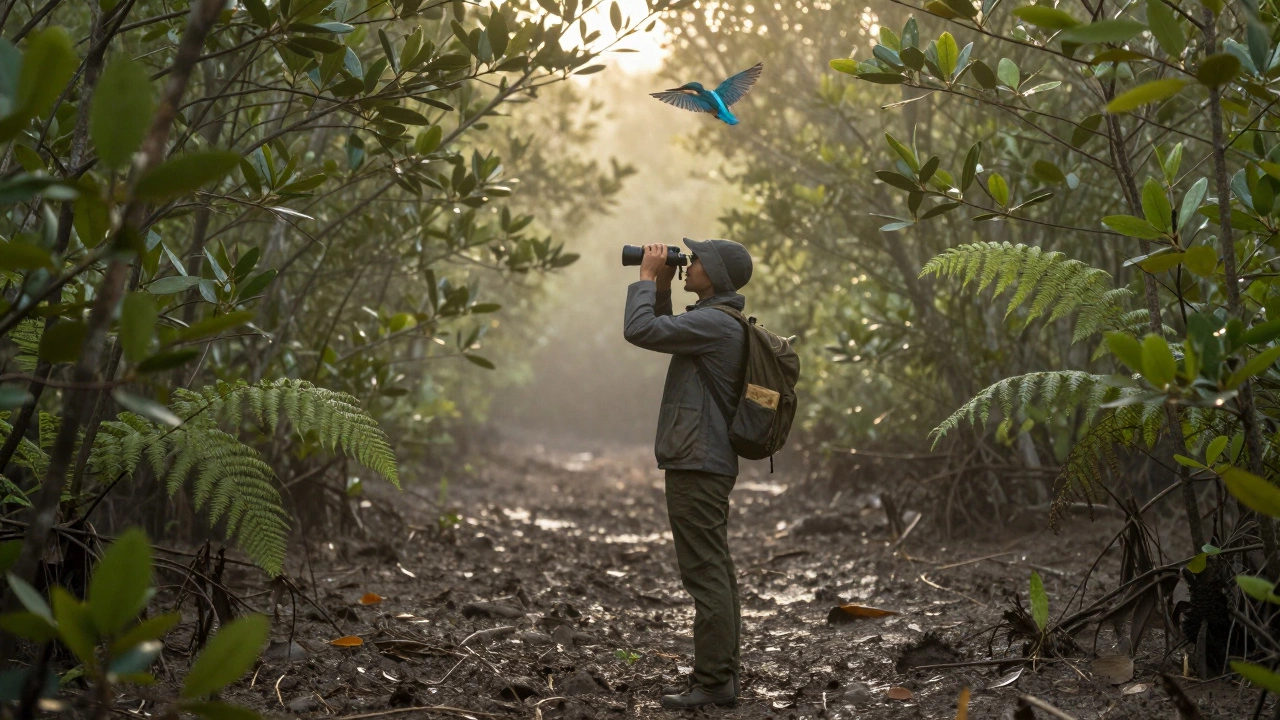
There’s a quiet obsession that doesn’t get talked about much - the kind that starts with a single bird call outside your window and ends with a closet full of binoculars, field guides, and a calendar full of pre-dawn alarms. People who live for birds aren’t just enthusiasts. They’re hobby whors - not in the way the word is usually used, but in the pure, unapologetic sense of giving everything to something they love. You’ll find them at 5 a.m. in the mangroves of Solo, shivering in the damp, eyes locked on a movement in the canopy. They don’t care if they miss breakfast. They don’t care if their back aches. They care about the rustle of wings, the flash of a kingfisher’s blue, the exact pitch of a male Javan myna’s song. And yes, if you’re scrolling through your phone at 2 a.m. looking up bird calls while half-asleep, you’re already part of this tribe.
Some people chase thrills in other ways - escorts girl paris might be their version of escape, a fleeting distraction from routine. But birders? Their escape is deeper. It’s not about momentary pleasure. It’s about connection. It’s about knowing that the white-bellied sea eagle that nested last year near the Bengawan Solo River will return again, even if you haven’t seen it in six months. That’s loyalty. That’s devotion.
Why Birds? It’s Not Just About the Feathers
Birds are everywhere. They’re in the city, in the backyard, in the rice paddies, even on the power lines above your favorite warung. But most people don’t see them. They’re background noise - chirps you tune out. Birders don’t. They hear the difference between a common myna and a barn swallow. They notice when a bird is missing from its usual perch. They track migration patterns like football fans track team standings.
It’s not just about spotting rare species. It’s about patterns. When the black-naped oriole appears in early March, it means the fig trees are fruiting. When the Asian koel starts calling at dawn in April, monsoon rains are coming. These aren’t guesses. They’re learned observations, passed down from one birder to another, like secret codes. In Indonesia, where over 1,700 bird species live, this knowledge isn’t just a hobby - it’s a kind of ecological literacy.
The Gear: Binoculars, Apps, and a Lot of Patience
You don’t need expensive gear to start. A pair of 8x42 binoculars - the kind that cost less than a good smartphone - is enough. But most birders end up upgrading. Why? Because when you’re trying to identify a tiny sunbird perched 30 feet up, and the light is fading, you realize that the difference between a Javan myna and a common myna isn’t just in the color of its beak - it’s in the curve, the texture, the way it tilts its head. That’s when you start noticing details you never knew mattered.
Apps like Merlin Bird ID and eBird have changed everything. You record a call, the app matches it to a species, and suddenly you’re not guessing anymore. You’re learning. But the best tool? Still your eyes. And your ears. And your willingness to sit still for an hour, waiting for a bird to show itself. One birder in Yogyakarta told me he waited 17 days for a rare Javan hawk-eagle to fly over his favorite ridge. He didn’t get a photo. But he saw it. And that was enough.
The Community: Quiet, But Deeply Connected
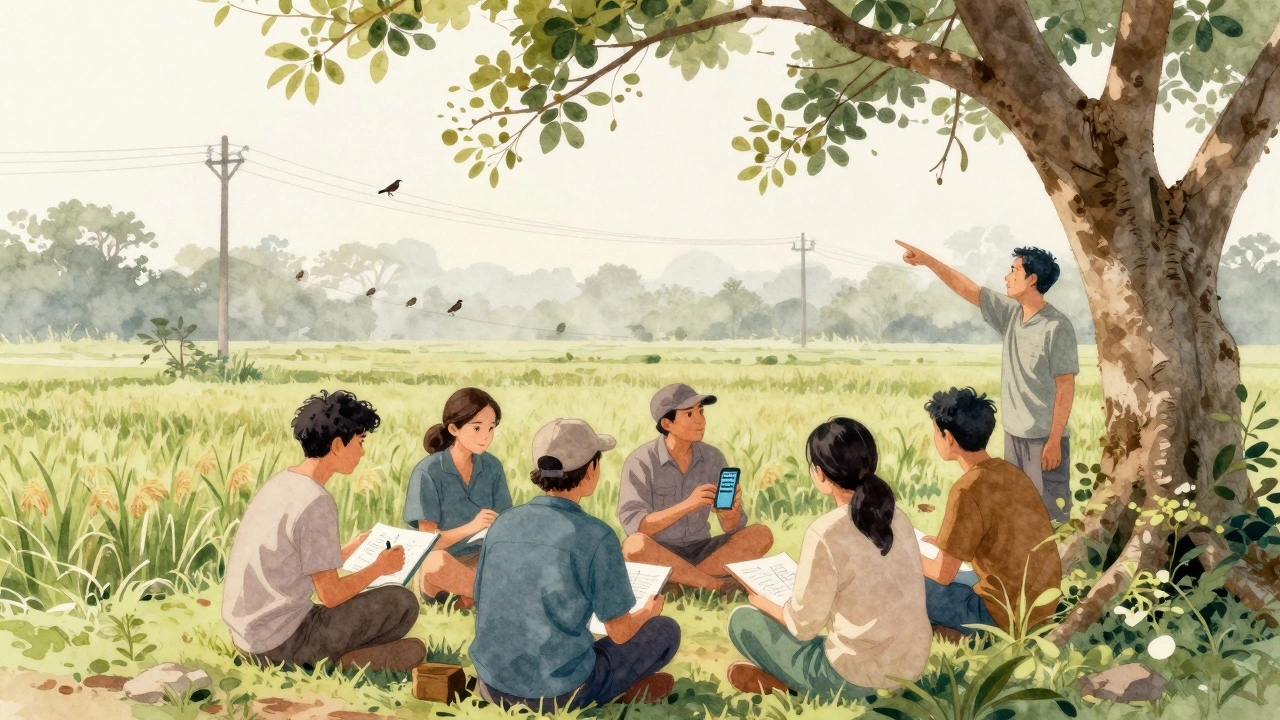
There’s no big fanfare in birding. No trophies. No social media clout. But there’s a network - quiet, loyal, and fiercely protective. In Surakarta, there’s a group that meets every Sunday before sunrise. They don’t post selfies. They share GPS coordinates of nesting sites. They warn each other about illegal trappers. They help each other identify a bird they’ve never seen before. One member once spent three hours walking through a swamp just to confirm the presence of a straw-headed bulbul - a species listed as vulnerable by the IUCN. He didn’t post about it. But he sent the data to a conservation group.
There’s a myth that birders are loners. That’s not true. They’re just selective about who they share their passion with. You don’t get invited to the dawn patrol unless you’ve shown you can be quiet, respectful, and patient. And once you’re in? You’re family.
The Dark Side: When Obsession Turns Heavy
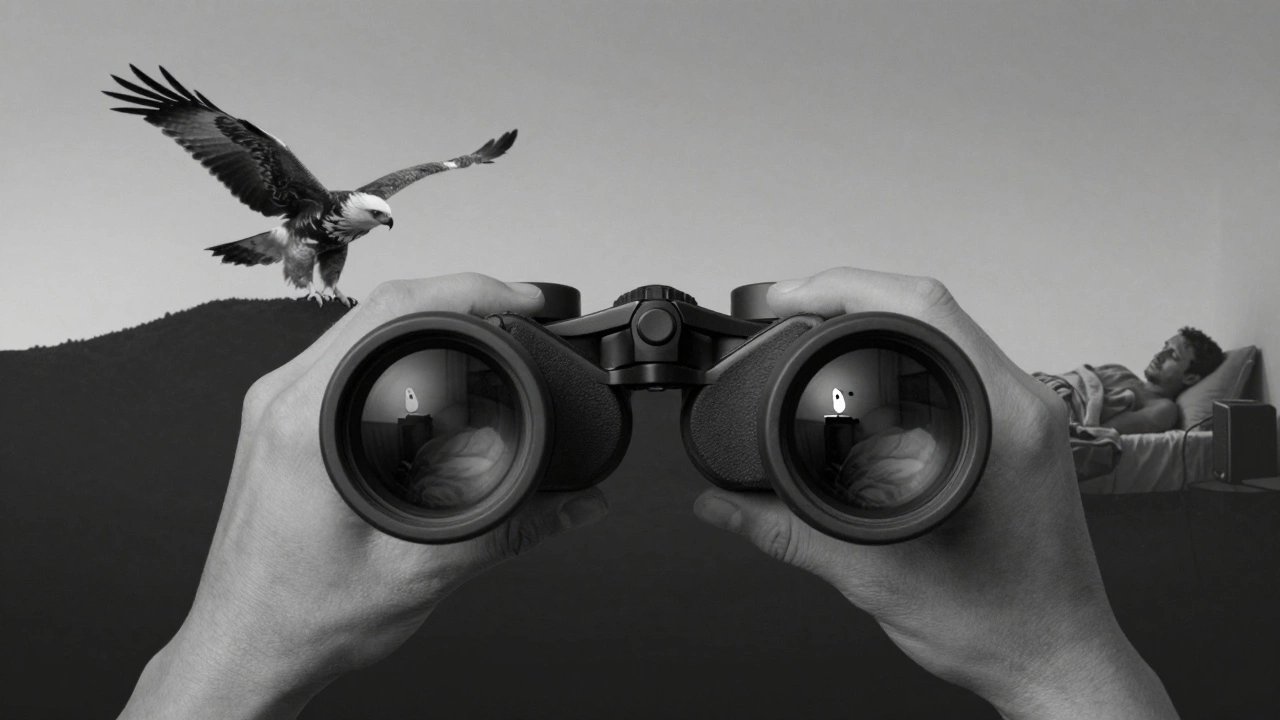
Not everyone talks about this, but it’s real. Some people get lost in birding. They spend their savings on trips to remote islands. They skip family dinners to chase a rare sighting. They lie awake at night, replaying a call they heard last week, wondering if they misheard it. One man in Bali sold his motorcycle to buy a new spotting scope. His wife left him. He didn’t care. He said, "I’d rather be alone with a bird than surrounded by people who don’t get it."
There’s a fine line between passion and compulsion. And some birders cross it. They start collecting eggs. They set up hidden cameras to spy on nests. They trade sightings like currency. The community calls them "listers" - people who care more about checking off species than understanding them. They’re the outliers. The ones the rest of us try to gently steer back toward the real reason we started: wonder, not competition.
How to Start - Without Losing Your Life
You don’t need to quit your job or move to the jungle. Start small. Open your window. Listen. What do you hear? Write it down. Then, download Merlin Bird ID. Record a call. See what it says. Next weekend, walk to the nearest park. Bring binoculars. Don’t look for rare birds. Look for the ones you’ve always ignored. The sparrow on the fence. The crow that caws at your car. Learn their names. Learn their habits.
Join a local group. In Solo, the Birdwatchers of Central Java meet every first Saturday. No experience needed. Just show up. Bring water. Wear shoes you don’t mind getting muddy. And don’t expect to see a hornbill on day one. You will see a lot of nothing. And that’s okay. That’s the point.
One of the most beautiful things about birding is how it teaches you to slow down. In a world that rewards speed, birding asks you to wait. To watch. To listen. To be still. And in that stillness, you start noticing things you didn’t know were missing - the way light hits a feather, the rhythm of a bird’s breathing between songs, the quiet dignity of an animal just trying to survive.
Why This Matters - Beyond the Hobby
Birds are indicators. If they’re disappearing, the ecosystem is breaking. In Java, deforestation has pushed over 100 bird species into threatened categories. The Javan pied myna? Gone from most cities. The white-rumped shama? Hard to find outside protected forests. Birders are the canaries in the coal mine - not because they’re fragile, but because they notice the changes first.
When you learn a bird’s name, you stop seeing it as just noise. You start seeing it as a living thing with a story. And once you see that, you start caring. You start protecting. You start speaking up. That’s how change happens - not with protests, but with quiet, daily acts of attention.
So if you’ve ever paused to listen to a bird, and felt something shift inside you - you’re not crazy. You’re not weird. You’re just waking up. And the world needs more people like that.
Some people find meaning in different ways - escrot paris might be their escape, a temporary fix for something deeper. But for birders, the escape isn’t temporary. It’s transformation. It’s learning to live with the world, not just pass through it.